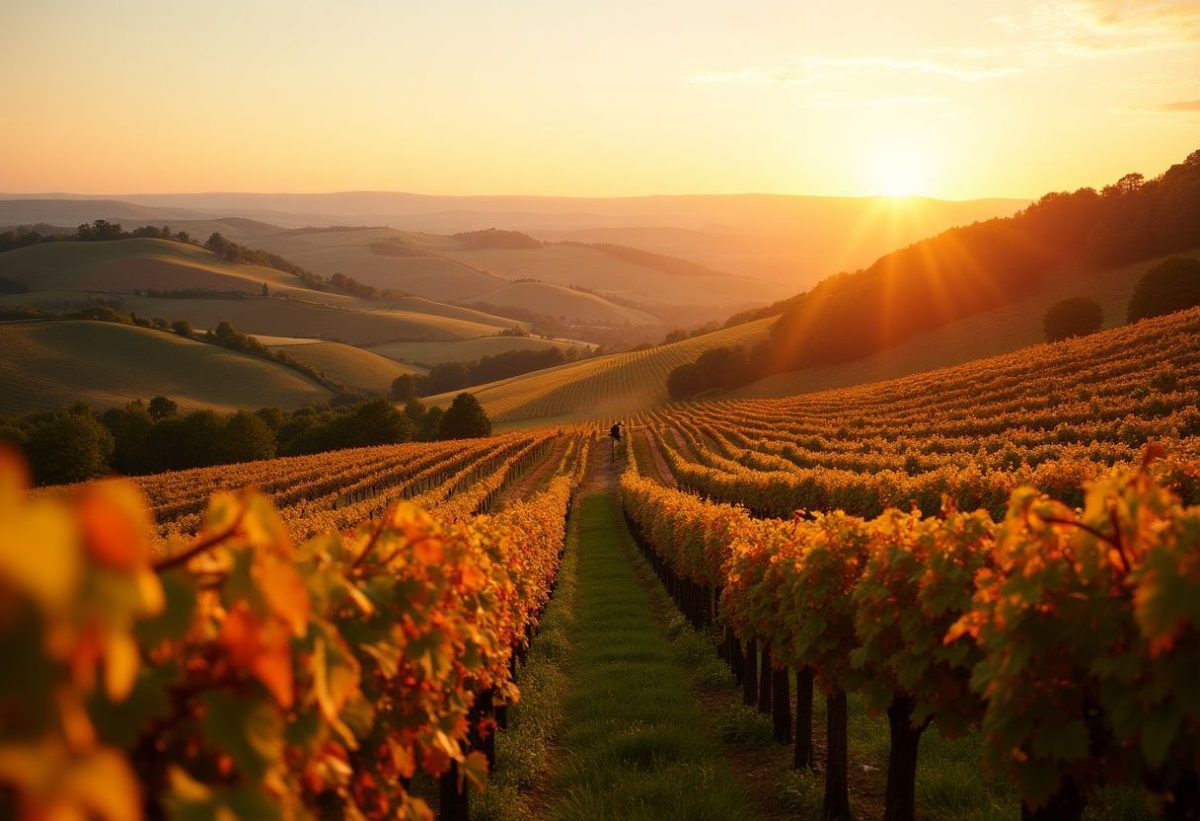
Burgundy red wine is not just a drink; it is an experience to be savored with as much passion as respect for its history and terroir. In the heart of France, the Burgundy region is globally recognized for the richness and diversity of its red wines. But what makes these wines so unique?
The historical origins of Burgundy red wine
To understand its current fame, it is essential to look into the history of Burgundy red wine. This wine-producing region, one of the oldest in France, has a tradition that dates back several millennia.
Viticulture in Burgundy began with the arrival of the Romans, who introduced the vine to this region. Cistercian and Benedictine monks then refined the art of winemaking during the Middle Ages, meticulously selecting the plots. They were the ones who established the first climats, these delimited vineyard plots that define the uniqueness of the Burgundian terroir.
Over the centuries, Burgundy wine has won the palates of kings and emperors, becoming a symbol of refinement and prestige. Today, it continues to captivate enthusiasts around the world, not only for its quality but also for its rich and fascinating history.
The terroir: an essential foundation
When talking about Burgundy red wine, the term terroir often comes up. This complex notion is essential to grasp the identity of this exceptional wine.
- Geology: The diversity of soils in Burgundy, primarily composed of limestone, clay, and marl, contributes to giving the wine a wide range of aromas and flavors.
- Climate: The continental climate, with its cold winters and hot summers, greatly influences the ripening of the grapes, bringing a perfect balance between acidity and sweetness.
- Climats: The small vineyard plots, each with its own identity, reflect the diversity of the Burgundian terroir. This meticulous subdivision has been recognized as a UNESCO World Heritage site.
In Burgundy, every hill, every valley, every vineyard plot tells a unique story. The resulting red wine is therefore a faithful portrait of the land from which it comes.
The emblematic grape varieties and their expression
The Pinot Noir plays a predominant role in the production of red wine in Burgundy. This grape variety is renowned for its finesse and its ability to fully express the terroir.
The Pinot Noir is the main grape variety used in the production of Burgundy red wine. It is known for its aromatic complexity, offering notes of cherry, raspberry, as well as underbrush and spices. The subtlety of this grape variety allows it to capture the nuances of the terroir and convey them in every bottle.
The grapes are hand-harvested, with great care taken in selecting the bunches. The winemaking process then follows traditional methods, with particular attention paid to each step to preserve the purity of the fruit.
Wines from Burgundy red wine are often aged in oak barrels, which gives them roundness and complexity. The result is a characterful wine that can age for many years while developing increasingly rich and refined aromas.
Food and wine pairings: enhancing Burgundy red wine
Burgundy red wine pairs beautifully with a variety of dishes, highlighting its delicate and complex qualities.
- Red meats: The flavors of Pinot Noir harmonize wonderfully with grilled or roasted meats, particularly lamb and beef.
- Poultry: A coq au vin, made with this same wine, is an essential classic.
- Cheeses: Aged cheeses, such as Époisses and Comté, pair perfectly with the fruity and spicy notes of Burgundy red wine.
- Mushrooms: Dishes based on mushrooms, like a porcini risotto, enhance the earthy aromas of Pinot Noir.
Food and wine pairings are an invitation to explore the culinary richness of Burgundy, where every meal becomes a moment of sharing and conviviality.