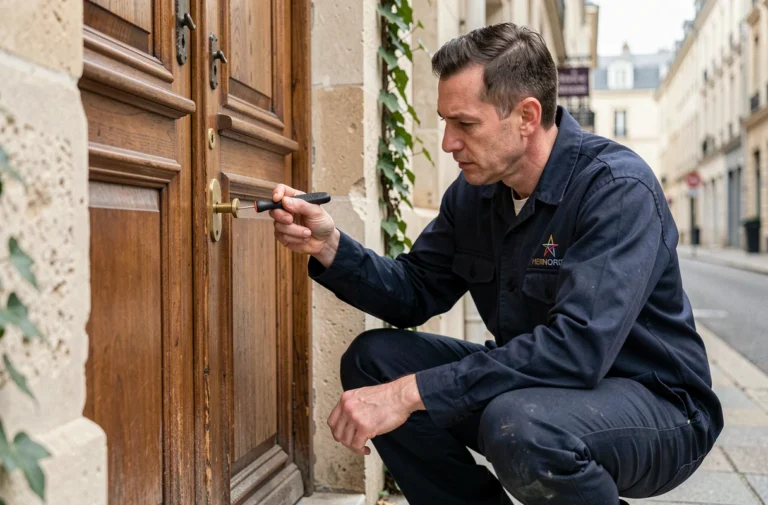
Searching for a house in Conceze means taking an interest in a village in Corrèze where the old buildings dominate and where each property has its own characteristics. Before envisioning a daily life on-site, several technical checks should be done early on, sometimes as soon as the first visit. The local market remains modest in volume, making each listing valuable, but also making each mistake more costly.
Validity of the DPE in Conceze: a common trap for old houses
You have spotted a house with an energy performance diagnosis displayed in class D or E. The document seems recent, dated less than ten years ago. However, it may no longer have any legal value.
DPEs carried out between January 2018 and June 2021 are no longer valid as of January 2025, even if their theoretical duration of ten years has not expired. This nuance is rarely mentioned in listings. In Conceze, where a significant portion of the housing stock dates back several decades, many diagnostics were carried out during this period.
The reflex to adopt: check the exact date of the DPE, not just the letter displayed. If the diagnosis falls within this window, request a new DPE before proceeding. A property rated D with an old scale can shift to E or F with the current method, which radically changes the renovation budget.
To browse the available properties in the municipality, houses on Conceze.com allow you to compare listings and identify those that mention a recent diagnosis.
Mandatory energy audit: what it changes for buying a house rated E, F, or G
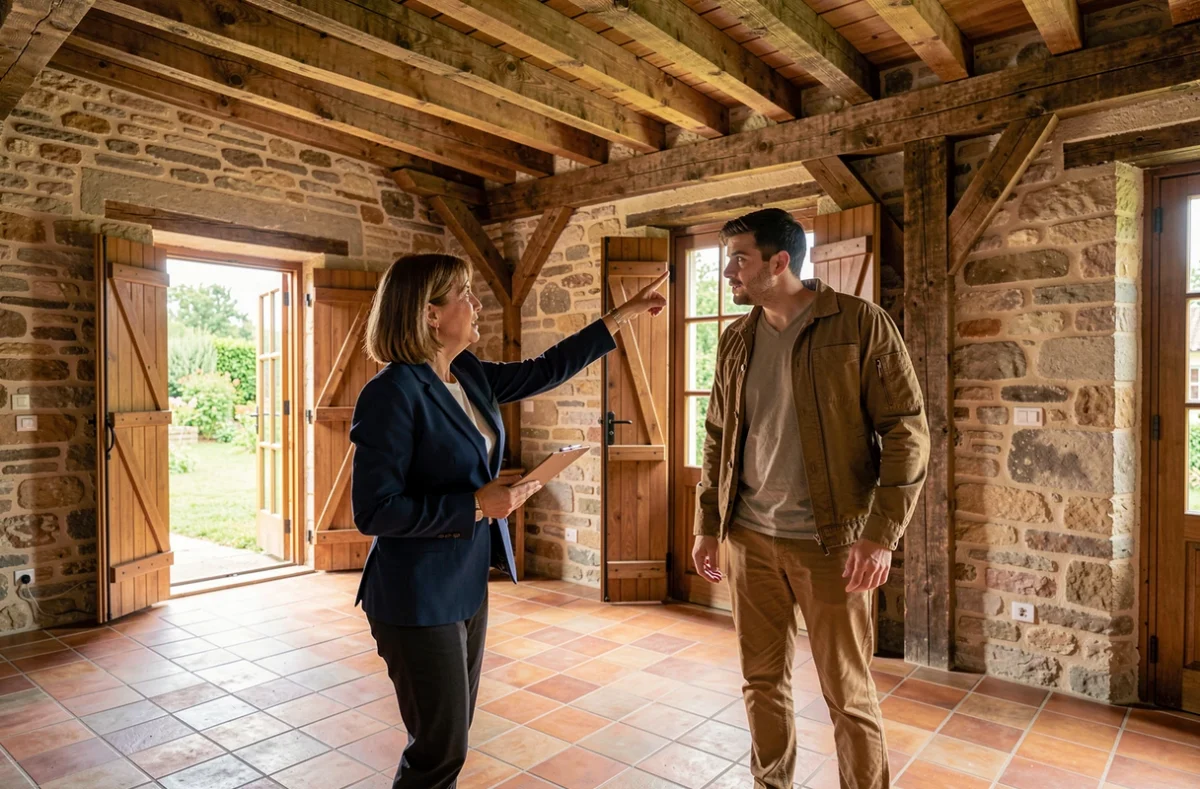
As of January 1, 2025, the sale of an individual house rated E, F, or G according to the DPE must be accompanied by a regulatory energy audit. This document goes beyond a simple diagnosis: it proposes costed renovation scenarios, with a priority order.
Why is it useful for the buyer? Because it allows for a comparison of two properties on a concrete basis. A house listed at an attractive price but rated F can end up costing much more than a better-rated property once insulation and heating renovations are factored in.
Read the audit before negotiating the sale price
The energy audit details the expense items: attic insulation, replacement of joinery, heating system. Each renovation scenario indicates an estimated cost and the expected energy class gain. It is a direct negotiation lever.
A seller presenting an audit with heavy renovation needs knows that the buyer has quantified arguments. Use this data during the price discussion, rather than relying on a general impression of the property’s condition.
Risk assessment in Conceze: check the plot, not just the house
Two neighboring houses in a village in Corrèze may be exposed to very different risks. The state of risks and pollution (ERP) provides information on natural, technological, mining, seismic risks, clay shrink-swell, and soil pollution.
The ERP must be provided from the first visit and must be less than six months old. If a seller or agent postpones this provision until the time of the compromise, it is a warning sign. Request it even before visiting a second time.
Clay shrink-swell: an underestimated risk in Corrèze
The phenomenon of clay soil shrink-swell causes cracks in foundations and walls. This is not visible to the naked eye during a quick visit, but the ERP indicates whether the plot is in an exposed area.
If this is the case, inspect the facades carefully. Stair-step cracks on load-bearing walls, doors that do not close properly, or floors that are no longer level are concrete signs. A house on clay soil requires suitable foundations, and their absence can lead to costly structural work.
Visiting a house in Conceze: key points not to miss
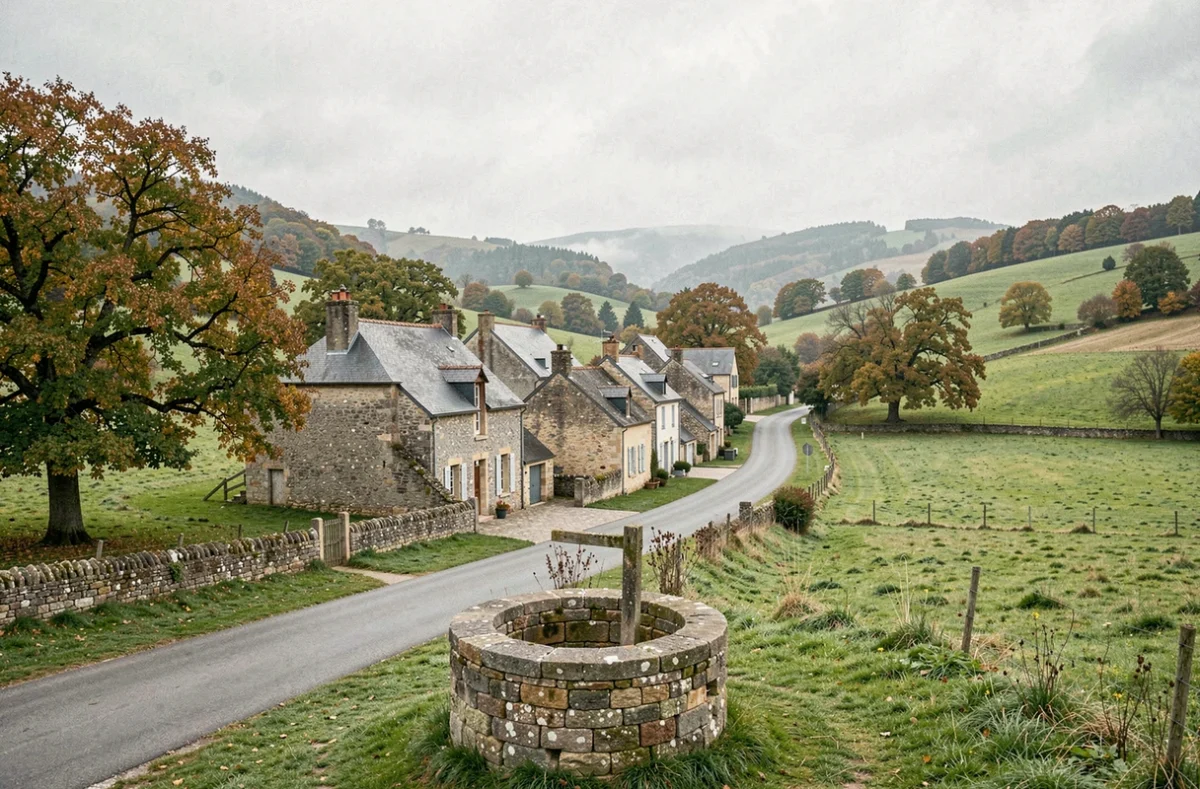
Competitors often list general advice on property visits. In Conceze, the old buildings impose specific checks that you won’t find in a standard guide.
- The slate or flat tile roof: check the condition of the covering from the outside, but also the framework from the attic. An old wooden framework may show signs of wood-eating insects or moisture
- Individual sanitation: in the absence of a sewage system, the compliance of the non-collective sanitation installation must be included in the sales file. Bringing it up to standard represents a significant budget
- Stone walls: they offer good thermal inertia, but poorly installed interior insulation can create condensation problems. Ask if any insulation work has already been done and by what method
- Access and parking: some village houses in Conceze have narrow access or limited parking. Visit under real conditions, not just on a quiet Sunday morning
Each point on this list can represent several thousand euros in work. Identifying them before signing avoids unpleasant surprises.
Compare the real cost of an old house and a renovated property
The listed price of a house says little about its actual acquisition cost. Between notary fees, energy renovation work, and potential compliance upgrades, the gap between two properties can narrow or even reverse.
A renovated property with a recent DPE in class C or D often costs less overall than an old house rated F. The energy audit, when available, allows for putting the numbers on the table.
Also consider the loan rate: a renovation budget financed by credit increases the overall cost of the project. It is better to integrate these expenses into your financing plan from the start, rather than discovering them after signing.
Finding the right house in Conceze requires looking beyond the stone facade and the garden. The date of the DPE, the content of the energy audit, the state of risks of the plot, and the actual condition of the framework or sanitation are elements that weigh as much as the charm of the place. These factors determine whether the asking price corresponds to the property’s real value.