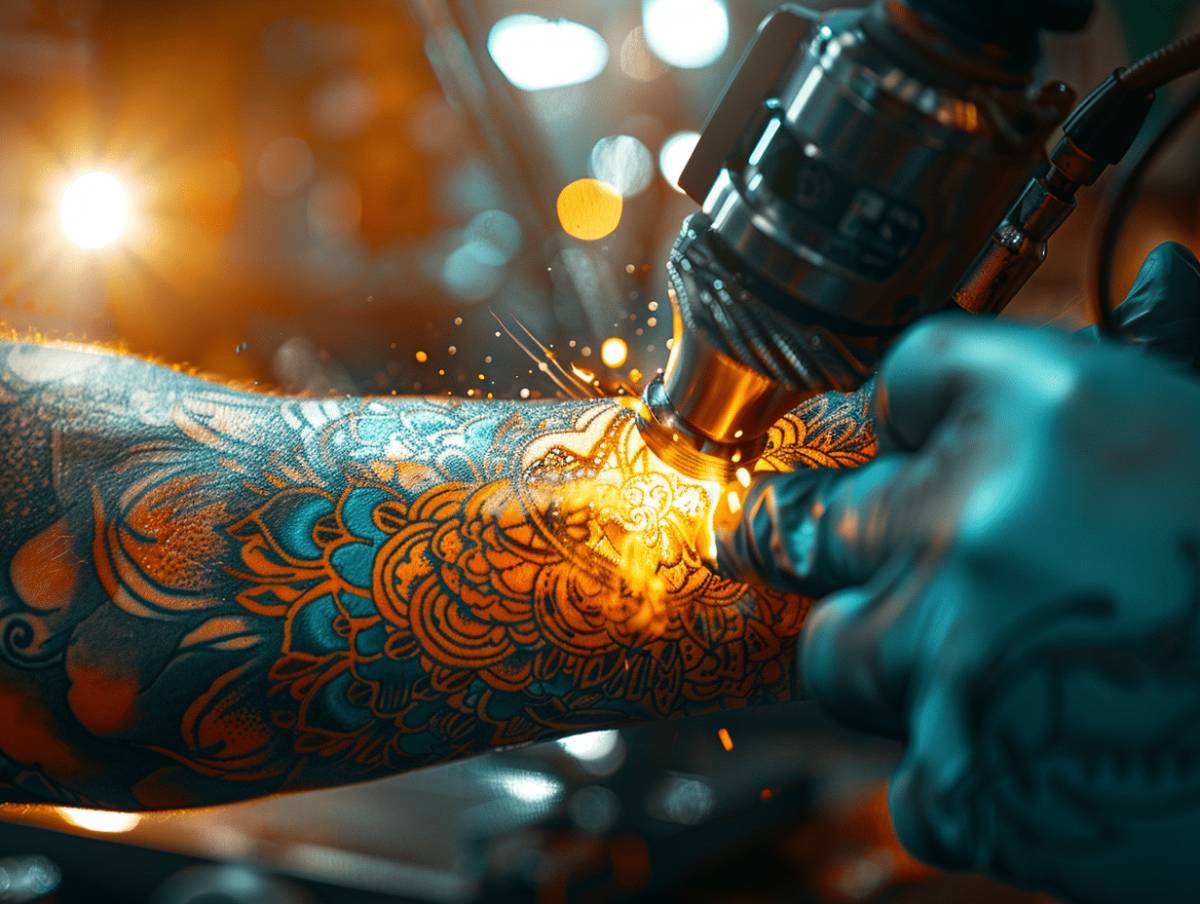
In the field of body art, transforming existing tattoos into new creations has become a captivating trend. It turns out that regrets or changes in taste are no longer a dead end for those who wear designs on their skin that have become undesirable. Tattoo artists demonstrate inventiveness by integrating old inks into fresh, personalized works. This artistic rebirth offers a second life to tattoos, allowing for an aesthetic evolution that reflects the history and individual journey of each person. It is a testament to the ability of art to reinvent itself and the limitless imagination of tattoo artists.
The Creative Metamorphosis: The Art of Transforming an Existing Tattoo
The renewal of body art takes shape under the needles of tattoo artists endowed with boundless creativity. Transforming an old tattoo into a work of art is not a trivial act; it is a statement of self, a reappropriation of one’s body image. Tattooing, an ancient practice, now adapts to the evolving narratives of the skin, reflecting the plasticity of this art. Outdated patterns, obsolete memories, or old symbols, which have sometimes become dissonant with the individual’s evolution, find new life thanks to the talent of tattoo artists who enhance, modify, or even completely cover old works. Covering a tattoo means accepting the challenge of working with what exists, harmonizing the past with the present. Tattoo artists must demonstrate a keen understanding of styles and techniques to succeed in this metamorphosis. Whether it involves adding elements to a tribal design, weaving a story around a Japanese motif, or transforming a naive figure into a realistic depiction, each project becomes a dialogue between the artist and the living canvas that is the skin. The necessary creativity of the tattoo artist also manifests in the ability to seamlessly integrate technical aspects, such as the density of the existing ink, the color palette, and the texture of the skin. These constraints do not hinder the artist; they stimulate their imagination and ability to reinvent. The skin, far from being an obstacle, becomes the muse that inspires works of renewed complexity and beauty. In this transformation process, the relationship between the tattoo artist and their client takes on a collaborative dimension. It is a co-creation that requires listening, understanding, and trust. Each new work that emerges is the result of a convergence between the individual’s desire for change and the artistic vision of the tattoo artist, thus uniting two wills in a common aesthetic expression.
Techniques and Testimonials: Tattoo Artists Reinvent the Canvases of Skin
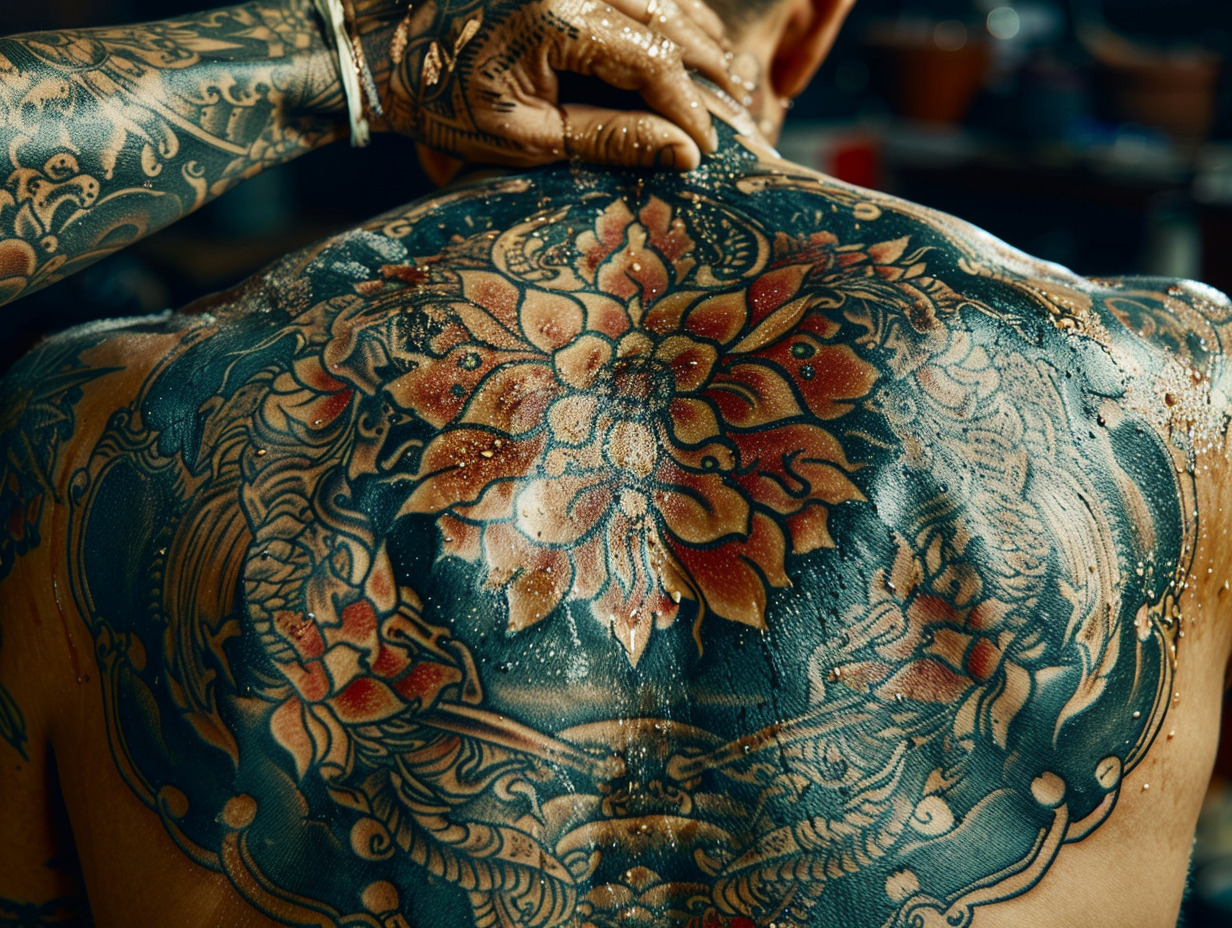
In the arena of body art, tattoo artists are virtuosos who wield the tattoo machine with surgical precision. Each style, whether tribal, realistic, biomechanical, old school, or new school, requires particular technical and artistic mastery. Take, for example, realistic depiction: it necessitates the ability to faithfully reproduce a subject, often in black and gray, where every detail matters. Impeccable hygiene is another imperative, essential to the integrity of the process and the prevention of health risks. Tattoo artists, as true guardians of their clients’ health, make this requirement a top priority. Their testimonials reveal the complexity of the challenges encountered. For instance, updating a tribal tattoo involves not only rethinking geometric and symmetrical patterns but also merging the old with the new into a coherent whole. The Japanese tattoo, with its colorful and detailed motifs, offers a rich playground for narrative expression through the skin. As for the naive tattoo, often criticized for its apparent simplicity, it gains sophistication when reinterpreted by the hand of a master. In the face of these challenges, the relationship between the tattoo artist and their clientele is woven on the foundation of trust and a mutual understanding of artistic intentions. In the dialogue that unfolds, the client brings their story, experiences, and aspirations, while the tattoo artist offers their vision, technique, and art. A synergy is created where the transformation of a tattoo becomes much more than an aesthetic modification; it is a deeply personal and artistic process, a renewal marked on the skin itself.