
The position of the head of the bed affects sleep quality far beyond what purely aesthetic approaches suggest. Height of inclination, distance from sources of thermal disturbance, alignment with the sleeper’s morphology: each parameter modifies respiratory mechanics and the continuity of sleep cycles.
Inclination of the head of the bed: the underestimated physiological parameter

Raising the head of the bed by 5 to 10° reduces symptoms of nocturnal gastroesophageal reflux and limits associated micro-awakenings. This adjustment improves sleep continuity in people suffering from GERD or mild apnea, according to recent studies on the ergonomics of head position.
Recommended read : How and where to find the NAN Cesu code for your administrative procedures?
We recommend using wedges under the head of the bed frame rather than stacking pillows. The extra pillow bends the neck without changing the angle of the torso, which compresses the upper airways instead of clearing them. The wedge, on the other hand, tilts the entire torso and keeps the cervical spine in a neutral alignment.
To know precisely where to place your head for sleeping, one must simultaneously consider the inclination of the mattress, the firmness of the pillow, and the sleeper’s usual position (supine, lateral, or prone). A side sleeper with poorly calibrated elevation experiences asymmetric cervical flexion that generates shoulder and trapezius pain.
See also : How to Successfully Dress Your Staircase: Materials and Tips to Know
Distance from the head of the bed to the window: thermal and acoustic threshold
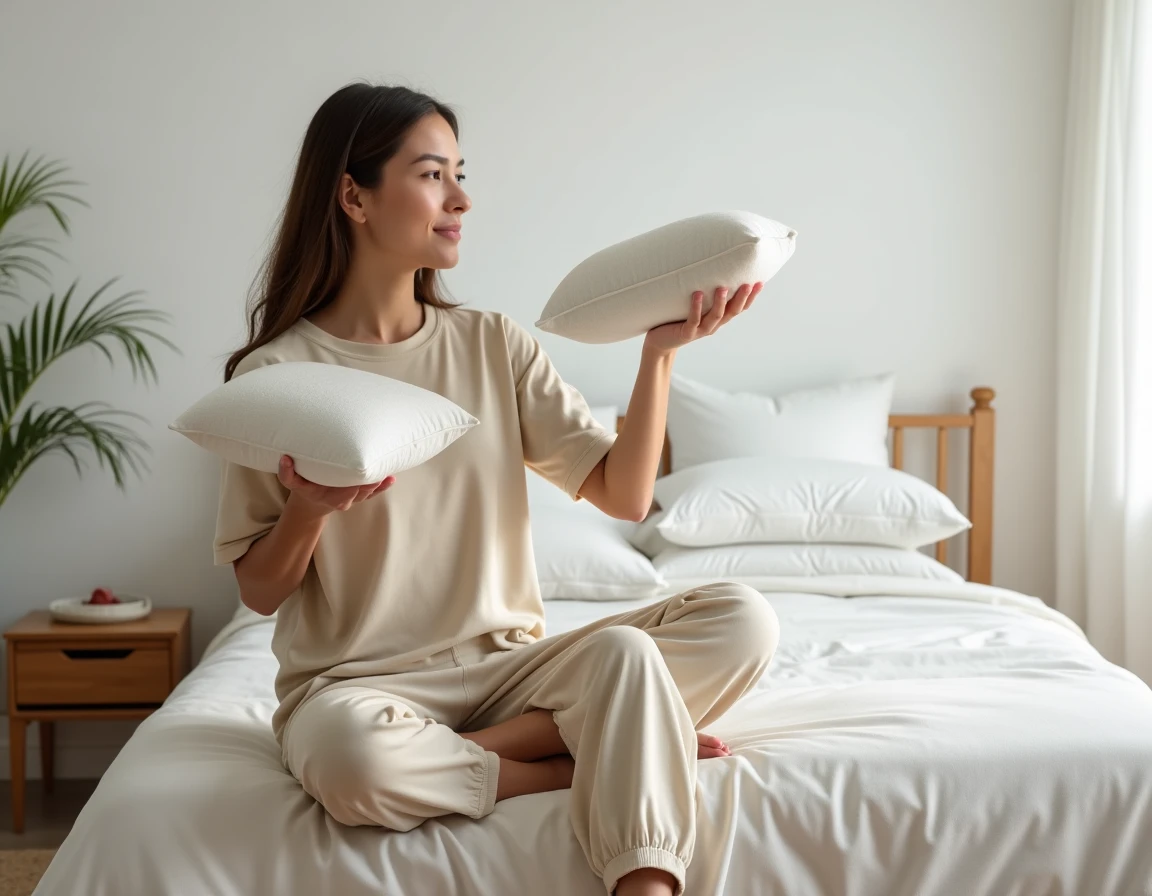
Leaving at least 50 cm between the head of the bed and the window reduces exposure to drafts, temperature variations, and outside noise. This distance is a recognized minimum threshold in interior architecture to preserve nighttime comfort and bedding.
The problem is not limited to winter cold. In summer, the proximity of single or poorly insulated glazing creates a localized thermal gradient around the skull and neck. The body reacts with micro-awakenings to regulate its core temperature, fragmenting deep sleep phases.
Narrow room configuration
In a small room, respecting these 50 cm often requires shifting the bed towards the center of the room or placing it against the opposite wall. We observe that this constraint also improves air circulation around the mattress, limiting moisture accumulation under the bed frame.
Position of the bed relative to the door: the angle of visual control
Positioning the head of the bed so that one can see the entrance door of the room without being in the direct line of the opening is a principle shared by Feng Shui and behavioral ergonomics. Feng Shui practitioners regularly warn about the negative effects of a bed positioned directly facing the door, a configuration sometimes referred to as the “coffin position.”
The bed at an angle to the door offers a reassuring field of vision without exposure to the airflow from the hallway. This positioning reduces the unconscious vigilance that the brain maintains when it does not “control” access to the room, which delays falling asleep.
Constraints to arbitrate
- If the only possible position places the bed facing the door, interposing a low piece of furniture or a bed end between the foot of the mattress and the opening mitigates the effect of direct airflow
- Avoid placing the head of the bed against a wall shared with a bathroom or kitchen, where plumbing generates perceptible low-frequency vibrations at night
- Do not place the head of the bed under a visible beam, which creates visual psychological pressure and alters the perception of volume above the sleeper
Cardinal orientation of the head: what traditions say (and what science does not confirm)
Feng Shui generally recommends sleeping with the head to the north to promote deep sleep. Indian Vastu Shastra, on the other hand, firmly discourages north and favors south or east. Sleeping with the head to the north is not a universal rule: orientation would depend on individual energy profiles according to these disciplines.
No published clinical study demonstrates that a particular cardinal point objectively improves sleep quality. We consider that cardinal orientation remains a secondary parameter compared to measurable factors (inclination, distance to the window, ambient temperature, darkness).
When cardinal orientation has an indirect effect
The east exposes the sleeper to the light of the rising sun if the window is not covered. This morning exposure can be beneficial for resetting the circadian rhythm but disrupts the sleep of people who work irregular hours. The orientation of the head in relation to openings matters more than the cardinal point itself.
Positioning checklist for restorative sleep
- Elevate the head of the bed with wedges under the bed frame (not with extra pillows) for an angle of 5 to 10° if you suffer from reflux or nasal congestion
- Maintain at least 50 cm between the head of the bed and any window, regardless of the type of glazing
- Position the bed diagonally from the door, never in the direct line of the opening
- Check that the head of the bed is not against a wall containing active plumbing
- Adapt the orientation to the openings of the room rather than to a theoretical cardinal point
The optimal positioning of the head for sleeping relies on measurable physical parameters. Before consulting a compass, adjust the inclination of your bed frame and check the distance between your pillow and the nearest source of disturbance. These adjustments yield tangible results from the very first night.