A relaxed chain that slaps against the swingarm at the first roundabout, a front tire with a sidewall showing the threads: you often discover the real condition of your motorcycle at the worst moment. Choosing the right machine and maintaining its critical components daily is primarily about avoiding situations where safety is determined in just a few meters of braking.
Technical inspection and Crit’Air sticker: two criteria to check before buying a motorcycle
Since the implementation of technical inspections for two-wheelers, the schedule for passing depends on the year of first registration. In 2026, motorcycles registered in 2020 and 2021 will reach their first deadline. For those registered from 2022 onwards, the inspection takes place within six months preceding the vehicle’s fifth anniversary.
In practical terms, buying a used 2020 motorcycle without an up-to-date technical inspection means inheriting an imminent deadline and potentially facing a refusal if safety points do not pass. You save time by requesting the report before signing.
The other often-overlooked parameter concerns the Crit’Air sticker. On a motorcycle, the environmental class is based on the engine’s Euro standard, not just on the vehicle’s year. Before buying, you should check the rules of the low emission zone (ZFE) in your metropolitan area. Restrictions vary from city to city: schedules, categories of vehicles affected, and exemptions depend on local decrees. A home-to-work trip allowed in one urban area may be restricted in a neighboring one.
You can explore the Expert Auto Moto website to discover models suited for different uses, including urban constraints related to ZFEs.
Choosing your motorcycle based on daily use and license
The classic trap is to fall for a displacement or a look without confronting the machine with its actual route. A heavy touring bike in a congested city center tires the wrists and shoulders in less than a week. A lightweight trail bike on the highway exposes you to painful vibrations after an hour.
Adapting the category to the license and experience
The A2 license limits power, but the range of accessible motorcycles remains broad. Instead of choosing the most powerful model allowed, evaluate the weight in running order, seat height, and riding position. A rider who barely touches the ground at a red light constantly compensates with their arms, creating an invisible but real fatigue on daily trips.
Thinking about resale and regular maintenance
Some brands impose short service intervals or expensive specific parts. Checking the cost of a standard service before purchase avoids unpleasant surprises. The price of a set of brake pads or a chain kit varies significantly from one model to another, even with equivalent displacements.
Daily motorcycle maintenance: the checks that really matter
Competitors often list about ten points. In practice, three areas concentrate the majority of breakdowns and risks on the road.
Transmission chain: tension and lubrication
A poorly tensioned chain accelerates wear on the sprocket and the crown, and alters cornering behavior. You check the motorcycle’s tension on a central stand (or workshop stand), with the rear wheel free. The acceptable play is indicated in the manufacturer’s maintenance manual. Lubricating the chain after every ride in the rain significantly extends its lifespan.
Tires: pressure and wear indicators
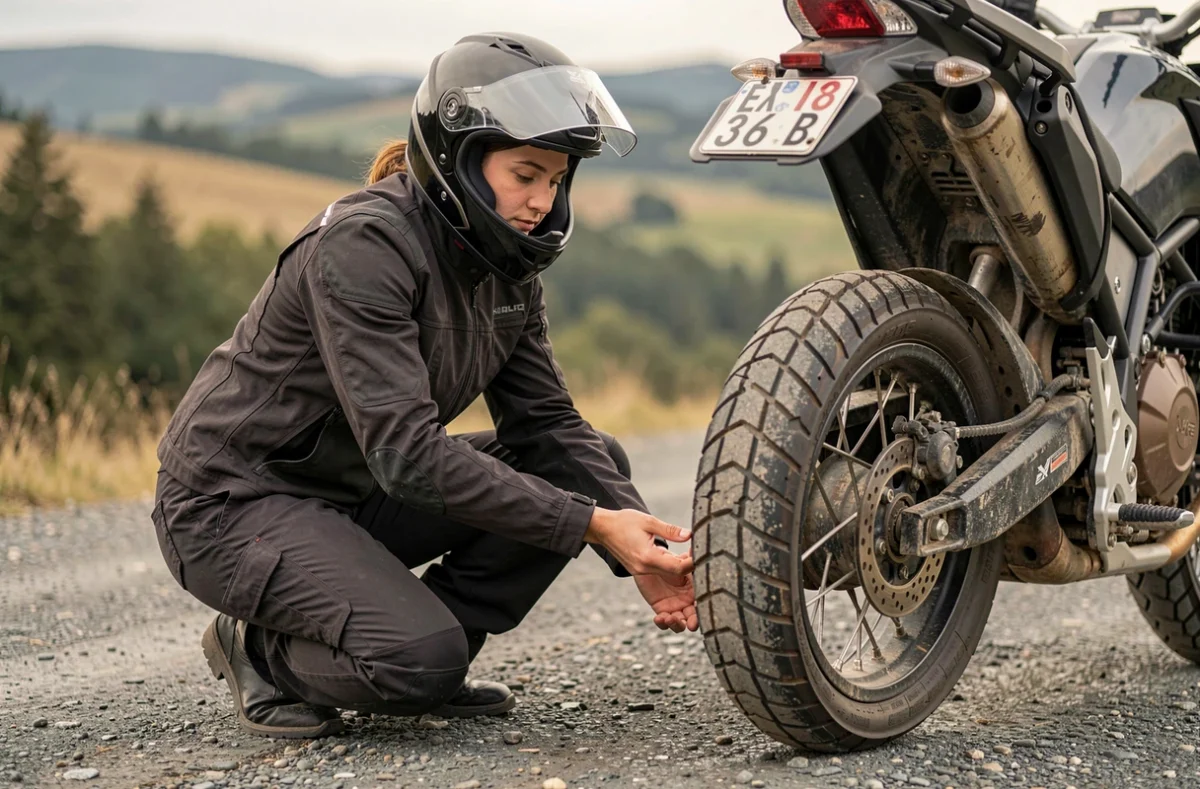
Pressure should be checked when cold, before riding. An under-inflated tire increases braking distance and degrades cornering stability. The wear indicators molded into the tread provide a reliable indication: when the rubber reaches their level, the tire must be replaced without delay.
Braking circuit: fluid and pads
Brake fluid absorbs moisture over time, lowering its boiling point. In the mountains or in high heat, degraded fluid can cause spongy braking. You visually check the level in the reservoir and replace the brake fluid according to the manufacturer’s interval, generally every two years.
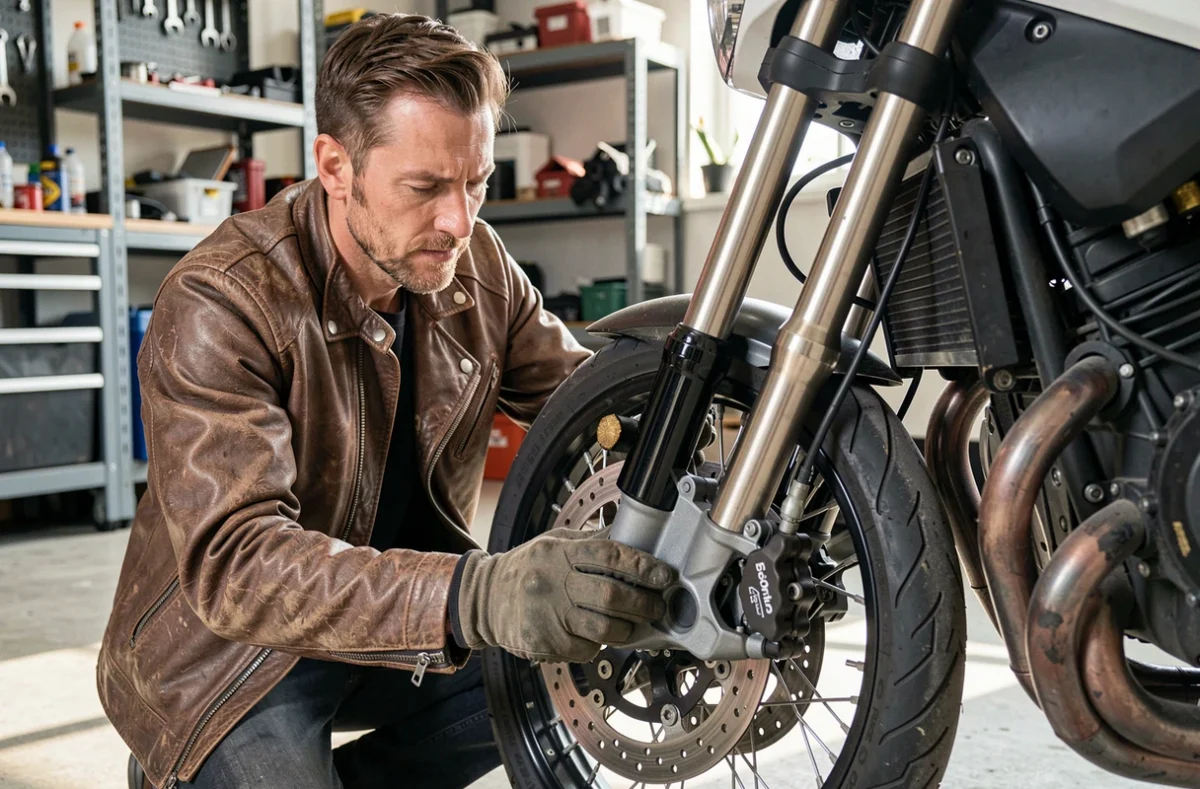
For the pads, a quick glance through the caliper is enough to assess the remaining thickness. If the lining approaches the metal backing, replacement is necessary.
Equipment and safety: what protects beyond the motorcycle
The condition of the machine is not everything. The helmet, certified gloves, and back protectors form the last barrier in case of a fall. Here are the points to watch regarding equipment:
- The helmet loses its absorption capabilities after an impact, even without visible damage. After a fall or impact, it should be replaced.
- CE-certified gloves protect the joints and palms, the most exposed areas in case of a slide. Non-certified gloves offer only insufficient textile protection.
- Motorcycle insurance must cover actual use (commuting, leisure, competition). A claim outside the declared framework may lead to a denial of compensation.
The condition of visibility equipment on the motorcycle (lights, turn signals, reflectors) is included in the points checked during the technical inspection. A burnt-out bulb can be replaced in a few minutes but may cost an additional trip to the inspection center.
Motorcycle battery and winter storage: preparing for periods of inactivity
A motorcycle that remains stationary for several weeks sees its battery gradually discharge. In winter, the cold accelerates this phenomenon. Connecting a maintenance charger (trickle charger) during periods of inactivity prevents straining the starter when spring arrives.
Before storing the motorcycle, fill the tank to limit condensation, clean the chain, and apply a layer of protective grease. Storing the motorcycle on a central stand or motorcycle lift relieves the tires and suspensions.
Daily motorcycle maintenance relies on a few regular actions rather than heavy interventions. The chain, tires, and braking circuit concentrate the essential checks. The rest is a matter of discipline: check the pressure before leaving, lubricate after rain, and glance at the pads once a month. These habits take little time and significantly improve the machine’s reliability over time.