
The Highway Code does not favor ready-made answers. A right-side collision is never just an automatic fault: each incident forces a reopening of the responsibility file, juggling case law, a fine analysis of the scene, and the subtleties of the regulations. With Article R. 415-10 in hand, the priority to the right sometimes wavers under the weight of circumstances. The judges scrutinize the origin of the impact, the precise positions of the vehicles, and whether or not there is a blatant fault. The insurance must keep pace and compensate without delay, driven by the Badinter law which imposes a rapid and automatic coverage, even when the distribution of responsibilities remains uncertain. Obviously, some scenarios fall outside the framework: the opening of a door, for example, requires attention to every detail to understand who, really, should have been attentive.
Understanding the concept of responsibility in a right-side collision
On the road, even with clear rules, each collision has its own story. A simple intersection, a lane change, and everything is replayed. To determine who committed a fault in a right-side collision, one must dissect every element of the context: precise trajectory, visible or not priorities, signage ignored or respected. These are the pieces of the puzzle that judges tirelessly seek, as the responsibility in a right-side collision explains very concretely.
Nothing is systematic: the driver who collides is not always at fault. The position of both vehicles, visibility, speed, and available signage are analyzed in detail. A friendly report that is complete, accompanied by a diagram, becomes crucial for understanding the chain of responsibilities. Sometimes, faults are shared: if each has violated a rule, each insurance covers part of the damages.
When it comes to ruling, the angle of the collision, the exact nature of the locations, and any observed infractions weigh heavily. On the insurance company side, no decision is made without a sharp look at all these supports: this is referred to as assessing civil liability. As a result, each claim leads to a meticulous analysis, forgetting the Manichean division of guilty/victim, is to understand road law.
What does the Badinter law say and what rules apply in the event of a car accident?
Since 1985, the Badinter law imposes speed and enhanced protection in the event of an accident. It places the victim at the center of the system: even before knowing who caused the accident, the insurer is obliged to advance compensation. In case of exceeding the deadline, the insurance organization must pay additional interest to the victim for each day of delay.
Victims are not all in the same situation. Here’s how the Badinter law distinguishes the different profiles concerned:
- Pedestrian, cyclist, or passenger victims almost always benefit from automatic coverage.
- Drivers of vehicles are compensated, unless they have committed an inexcusable fault.
- Beneficiaries of a deceased person are recognized for their own compensation.
On the insurers’ side, the legal timeline is strict: they have three to eight months to submit a compensation offer, depending on the extent of the material or bodily damages. At the slightest delay, the increased legal interest rate applies from the receipt of the request.
Case law has clarified the situation: regardless of any clause in a contract, the law remains a priority, ensuring immediate compensation. The Badinter law today sets a clear foundation for disputes related to road accidents: protect, repair, and decide quickly, without waiting for responsibility to be fully assigned.
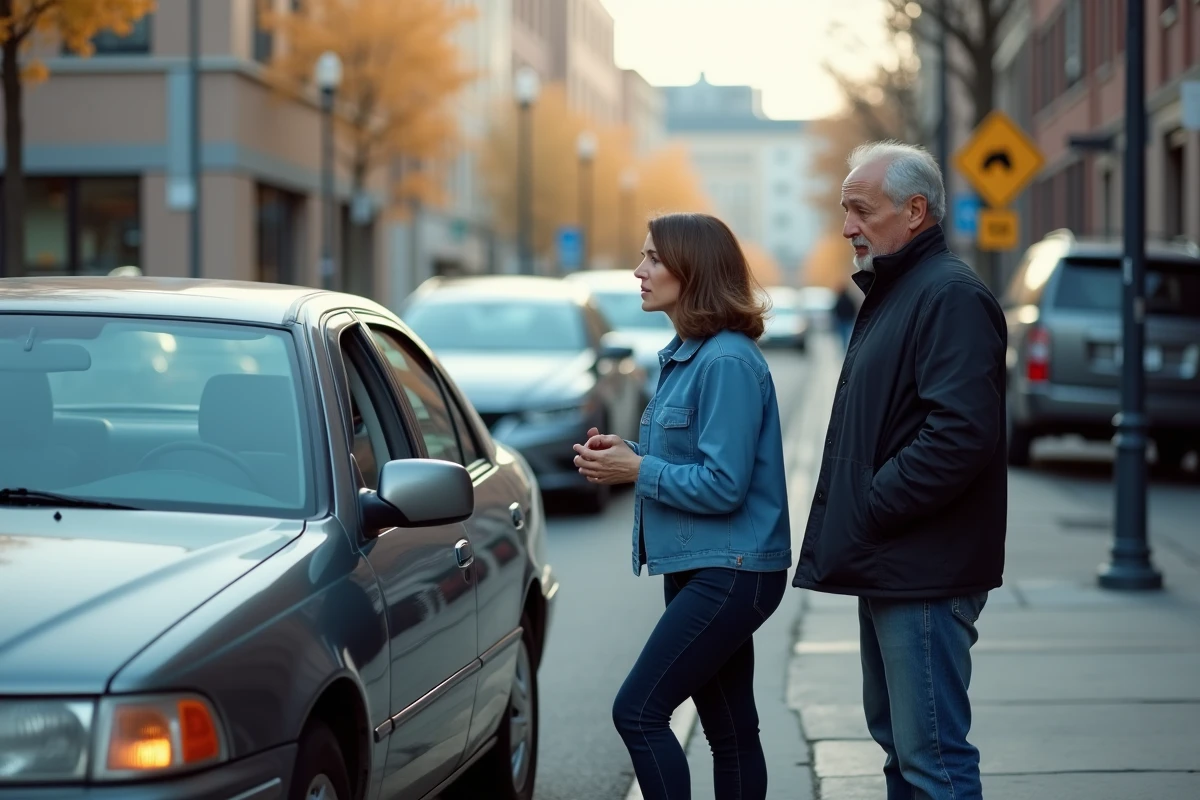
Insurance, compensation, and special cases: how to react after a right-side collision?
A right-side collision disrupts the routine, especially when it occurs at an intersection or during a lane change. The priority: to draft a precise and complete friendly report. Position of the vehicles, weather conditions, visible signage, slippery road: all details have their place to allow the insurer to faithfully reconstruct the context.
With the civil liability guarantee, auto insurance compensates the injured third party in most cases. The assessment of the claim will draw from the insurance contract, the IRSA convention, as well as the share of responsibility attributed to each driver. For those deemed not responsible, the procedures are simplified and the repair quick, the bonus-malus then reflects the actual share of responsibility.
But some cases fall outside the classic framework. Whether it involves an uninsured vehicle, a serious injury, or accidents involving multiple parties, the compensation is calculated according to the severity of the damage, the deductible provided, and the additional guarantees subscribed. Here, seeking the opinion of an expert or an independent advisor can change the game and allow the victim to obtain compensation at the right level.
Whatever happens, the responsiveness during the declaration to the insurer plays a decisive role: deadlines respected, solid file, gathered evidence (photos, testimonies, certificates) guarantee rapid handling and valuable peace of mind afterward.
Nothing is ever set in stone: on the road, each intersection draws its own rules, and sometimes it takes time, method, and an impeccable file for a right-side collision case to find its conclusion.