Nigeria has the largest population on the African continent, with a diaspora spread across every continent. Dialling a +234 number from France or another country means knowing a few rules, but also being aware of less widely documented issues: number reassignment, variable network quality and caller ID spoofing.
The technical framework has evolved in recent years under the guidance of the Nigerian Communications Commission (NCC), which regulates the country’s four main operators.
Calling an old +234 contact: check that the number still belongs to the right person
A Nigerian number saved in your contacts two or three years ago is not necessarily still assigned to the same subscriber. In Nigeria, phone numbers are treated as digital identifiers linked to financial services and online accounts. When a subscriber cancels their service or lets their line expire, the operator may reassign the number to a new user.
This creates a real risk: you call a business or family contact, but the person who answers is not the one you expected. Worse, the old number may be linked to a mobile banking account or e-wallet that has changed hands.
A call displaying a Nigerian number does not prove that it actually came from that number, either. The NCC has identified “call masking” as a major regulatory concern and has threatened to work with law enforcement to eliminate the practice. Before sharing sensitive information with someone calling from a +234 number, take a few precautions:
- Ask them to confirm their identity through a second channel (a messaging app or email) before deciding they are trustworthy.
- Check with your contact through social media or a mutual acquaintance to confirm that the number still belongs to them.
- Never share a bank verification code or password with someone whose identity is based solely on the number displayed.
To better understand Nigeria’s +234 calling code and its specific features, it is also worth looking at exactly how to dial the number.
Dialling a Nigerian number from abroad: watch out for the initial zero
Nigerian phone numbers follow a specific format. Locally, a mobile number has 11 digits in the format 0 + 3-digit network code + 7-digit subscriber number. The initial zero is the national trunk prefix. When calling from abroad, you must drop it.
From France, dial 00 (or the + sign), then 234, followed by the number without its initial zero. So a local number shown as 0803 XXX XXXX becomes +234 803 XXX XXXX when dialled internationally.
Landlines follow a similar pattern, but use city codes. Lagos uses code 1, while Abuja uses code 9. The NCC has updated some city codes by adding the prefix “20” before the old code: in Nigeria, Lagos has changed from 01 to 0201, and from abroad, from +234 1 to +234 201.
Mobile prefixes by operator
Four operators share the Nigerian market. Knowing the prefix helps you identify your contact’s network, which can be useful when anticipating connection quality.
- MTN: prefixes 803, 806, 810, 813, 814, 816, 903
- Airtel: prefixes 802, 808, 812, 901, 902, 904
- Glo: prefixes 805, 807, 811, 815
- 9mobile: prefixes 809, 817, 818, 908, 909
If the prefix of the number you are calling does not match any of these ranges, it may be a landline, a special number or a number reassigned from a new block.
Network quality in Nigeria: what the NCC reported in 2025
Dialling a number correctly does not always guarantee a smooth call. In October 2025, the NCC attributed service quality issues in major cities, including Lagos and Abuja, to insufficient network capacity in densely populated areas. The regulator called on operators to invest in 4G and 5G infrastructure to meet demand.
In practice, international calls to Nigeria may be affected by dropped calls, connection delays or poor audio quality, especially during peak hours. The issue is not with how the number is dialled, but with local network congestion.
The NCC has also introduced a compensation scheme for subscribers affected by poor service quality. The specific eligibility requirements are not detailed in publicly available documents, but the scheme mainly applies to subscribers living in Nigeria.
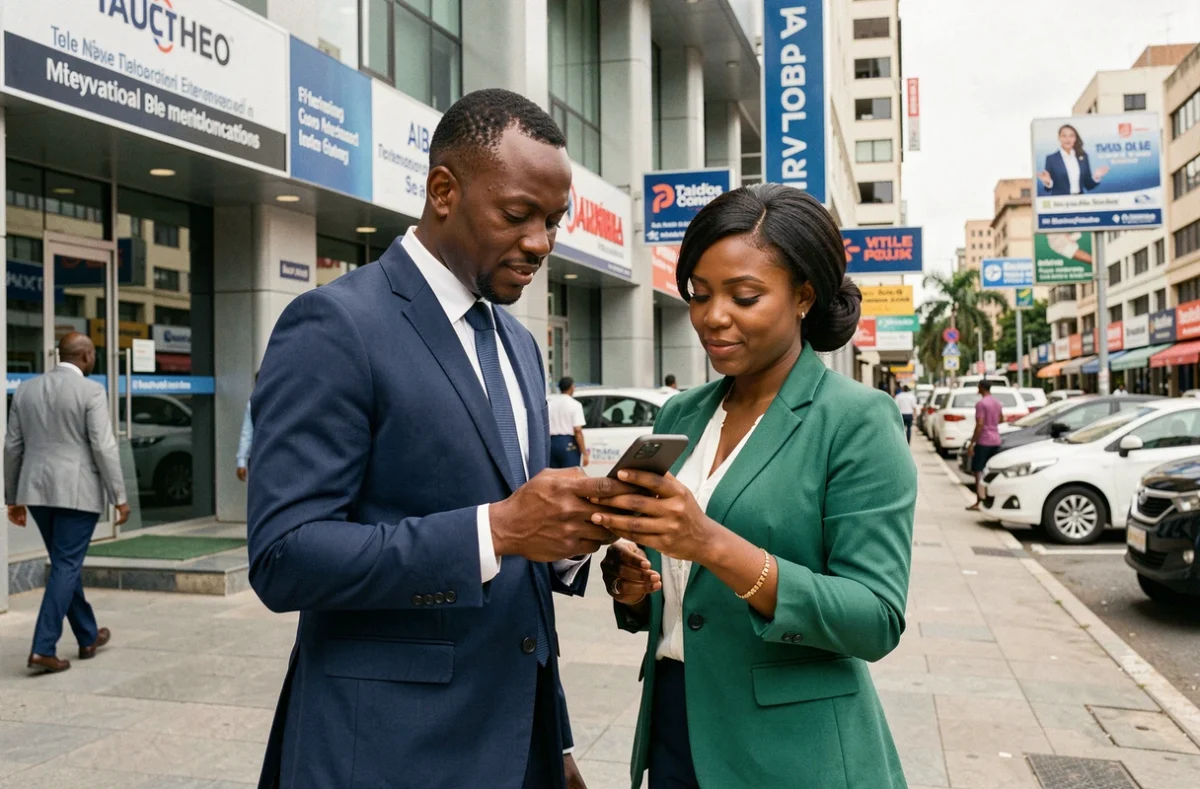
Incoming call from +234: tell a legitimate contact from a scam attempt
Receiving a call or text from a number beginning with +234 does not mean the call physically originated in Nigeria. Call masking allows the number displayed on the recipient’s screen to be changed. A caller anywhere in the world can make a Nigerian number appear on your phone.
This technique is used in well-documented scams: missed calls designed to prompt a callback to a premium-rate number, messages impersonating an operator or bank, and urgent requests for money from someone claiming to be a relative.
A displayed +234 number is not proof of the caller’s geographical origin. The NCC treats this as a security issue and works with security agencies to identify networks that engage in large-scale call masking.
What to do if you receive an unsolicited +234 call
Never call back an unknown +234 number without checking it first. If a message urges you to act immediately (make a transfer, share a security code or call back straight away), assume it is suspicious. French operators generally let you block unwanted international prefixes in your phone settings or through their app.
The time difference between France and Nigeria is small: the country uses West Africa Time (UTC+1) year-round, with no seasonal clock changes. A call from a +234 number in the middle of the night is therefore all the more suspicious, as it would also be nighttime in Nigeria.
Calling Nigeria or receiving a call from the country is technically straightforward. In 2026, the real challenge is less about dialling the number and more about trusting the identity behind it.