Bus shelter advertising posters change every week, and the old ones end up in the trash. For collectors, wall decoration enthusiasts, or the curious, the question arises: can one legally get their hands on these large formats before they disappear? The answer depends as much on the rotation schedule as on the intellectual property rules governing these visuals.
Replacement Schedule and Recovery Slots at JCDecaux
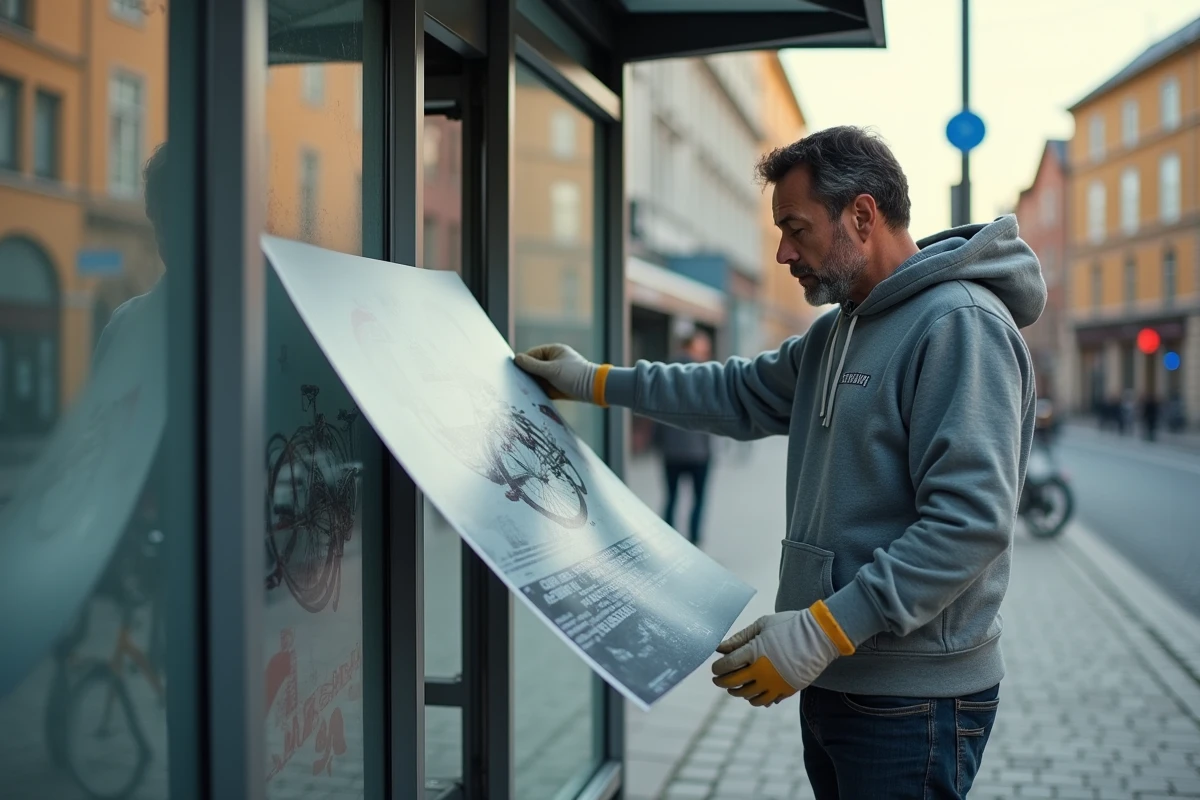
The determining factor for obtaining a poster is neither the city nor the furniture, but the day and time when the advertising agents intervene. Rotations take place midweek, usually on Wednesdays and Thursdays. Agents are willing to give away old posters upon simple request.
Testimonials from JCDecaux employees on Reddit confirm this process: the removed posters are usually thrown away, and most advertisers have no objection to giving away the old ones rather than discarding them. Some even set aside visuals in good condition to redistribute.
| Parameter | Detail |
|---|---|
| Rotation Days | Wednesday and Thursday |
| Time Slot | Early morning until early afternoon |
| Contact Person | On-site advertising agent |
| Procedure | Direct oral request, no form required |
| Cost | Free (poster intended for destruction) |
The morning slot remains the most reliable. By early afternoon, the rounds are generally finished and the posters already removed. One must also accept a factor of uncertainty: not all campaigns produce visuals in perfect condition after a week of exposure to the elements.
Before heading out, it may be useful to know how to recover JCDecaux bus shelter posters by spotting shelters near one’s home and identifying the lines prioritized by the teams.
Copyright on Advertising Posters: What the Law Really Allows
Physically recovering a poster does not pose a legal difficulty as long as the agent voluntarily hands it over. The paper medium, destined for destruction, no longer has commercial value for the advertiser. The real legal limit lies elsewhere.
The visual remains protected by the Intellectual Property Code, regardless of the fate of the physical medium. The graphic designer, photographer, and creative agency retain their copyright or neighboring rights on the image. Hanging the poster at home falls under private use and poses no problem.
On the other hand, certain uses cross the line:
- Reproducing or digitizing the poster to share online (website, social media) without permission from the rights holders may constitute infringement.
- Reselling prints or derivative products from the visual requires written agreement from the agency or advertiser.
- Using the poster in a commercial context (decorating a public space, for example) may also raise questions if the brand or photographer objects.
Strictly private and decorative use remains the only risk-free framework. For any other project, contacting the agency whose name often appears in small print on the visual helps clarify the ambiguity.
Transport Networks and Local Advertisers: Who to Contact Depending on the City
JCDecaux dominates the urban furniture market in France but does not manage the entire fleet. Some municipalities entrust their bus shelters to other operators (Clear Channel, Exterion Media, or municipal agencies). The recovery process remains similar, but the contact person changes.
The local transport network often serves as the best entry point. Networks like Vitalis in Poitiers officially refer to the contracted advertiser for this type of request. A call to the communication service of the transport organizing authority allows for quick identification of the relevant operator.
Some pointers to target the right person:
- Check the operator’s logo on the furniture itself (usually visible at the bottom of the glass casing).
- Contact the customer service of the urban transport network, which redirects to the advertiser.
- For large cities covered by JCDecaux, the “Contact Us” page on the official website allows you to reach the local subsidiary.
Advertising campaigns in train stations or the metro fall under separate contracts, often managed by specialized subsidiaries. The large format posters in these spaces follow more controlled destruction circuits, and recovery is less common than at street bus shelters.

Bus Shelter Poster Formats and Storage Constraints
Bus shelter posters are standardized large formats found on most urban furniture. This size imposes practical constraints that enthusiasts often underestimate.
The paper used for outdoor advertising has a sufficiently dense weight to withstand the elements for a week, but it remains fragile once folded. Marked folds or tears during removal are common. Transporting the poster rolled in a rigid tube minimizes damage.
Framing a poster of this size requires a custom frame, the cost of which far exceeds that of the visual (free). Some collectors opt for wall display without a frame, held by magnetic strips or clips, which reduces expenses while preserving the raw look of the medium.
Recovering bus shelter posters relies on a simple mechanism: being in the right place at the right time and asking the agents. The legal framework for physical recovery poses no difficulty as long as the advertiser consents to hand over the medium. Caution is only necessary regarding the use of the visual, which remains the intellectual property of its creators, regardless of the fate of the paper.